And why the time of day you water matters just as much as how much.
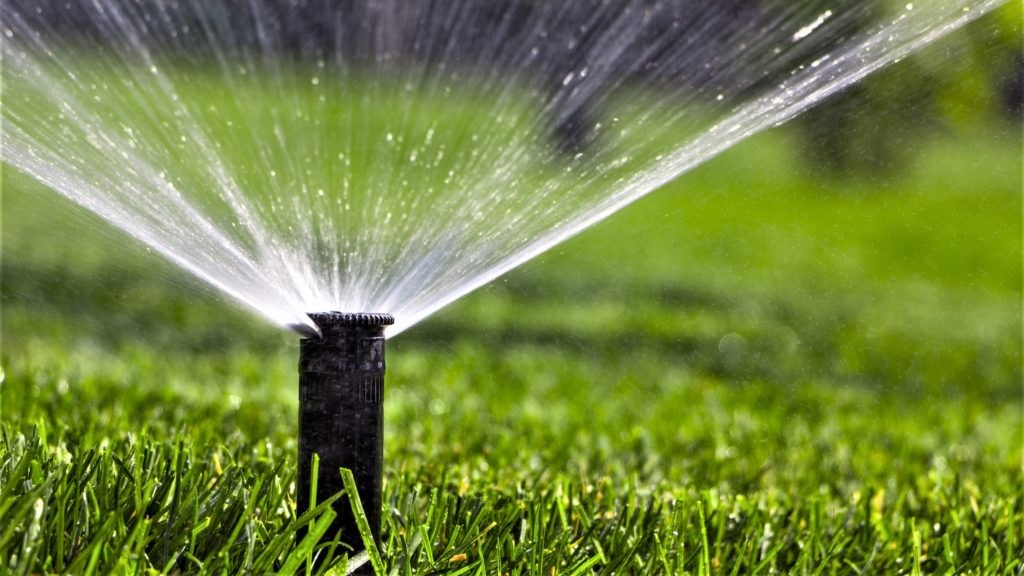
Watering seems like the simplest part of lawn care — turn on the sprinkler, walk away. But how often you water and what time of day you do it make a bigger difference than most homeowners realize, especially in Florida’s heat and humidity. Get the timing wrong and you can water every single day and still end up with a stressed, disease-prone lawn.
Most Florida lawns, including St. Augustinegrass, need about 3/4 to 1 inch of water per week — and that total includes rainfall, not just irrigation. During a rainy stretch, your lawn may not need supplemental watering at all.
A simple way to check: place a few short, straight-sided cans (tuna cans work well) around your yard while the sprinklers run, and time how long it takes to collect about half an inch of water. That tells you how long to run each zone to hit your weekly total in two watering sessions.
It’s tempting to water a little every day, but frequent shallow watering actually works against you. It trains roots to stay near the surface, since they never have to grow deeper to find moisture. Shallow-rooted lawns dry out faster, handle drought worse, and are more vulnerable to heat stress.
Watering deeply two to three times a week — enough to soak several inches into the soil — encourages roots to grow downward, building a lawn that holds up better between waterings and during dry spells.
The generally recommended window is 4:00–10:00 AM, and there are two real reasons why, not just tradition:
Watering under the midday or early-afternoon sun means a significant portion evaporates before it ever reaches the root zone — you end up paying for water your lawn never actually gets to use. The heat also means what water does soak in evaporates from the soil surface faster, so you’re watering more often to achieve the same result.
If afternoon watering wastes water, watering at night creates the opposite problem: the grass has no chance to dry out before morning. Turf that sits wet for eight or more hours overnight is exactly the environment fungal diseases need to take hold — this is one of the most common, avoidable causes of large patch and other lawn diseases we see.
Watering on a fixed schedule regardless of these signs — or regardless of recent rainfall — is one of the most common ways Florida homeowners overwater without realizing it.