The gentler alternative to pressure washing that actually treats the cause of those green and black stains, not just the symptoms.
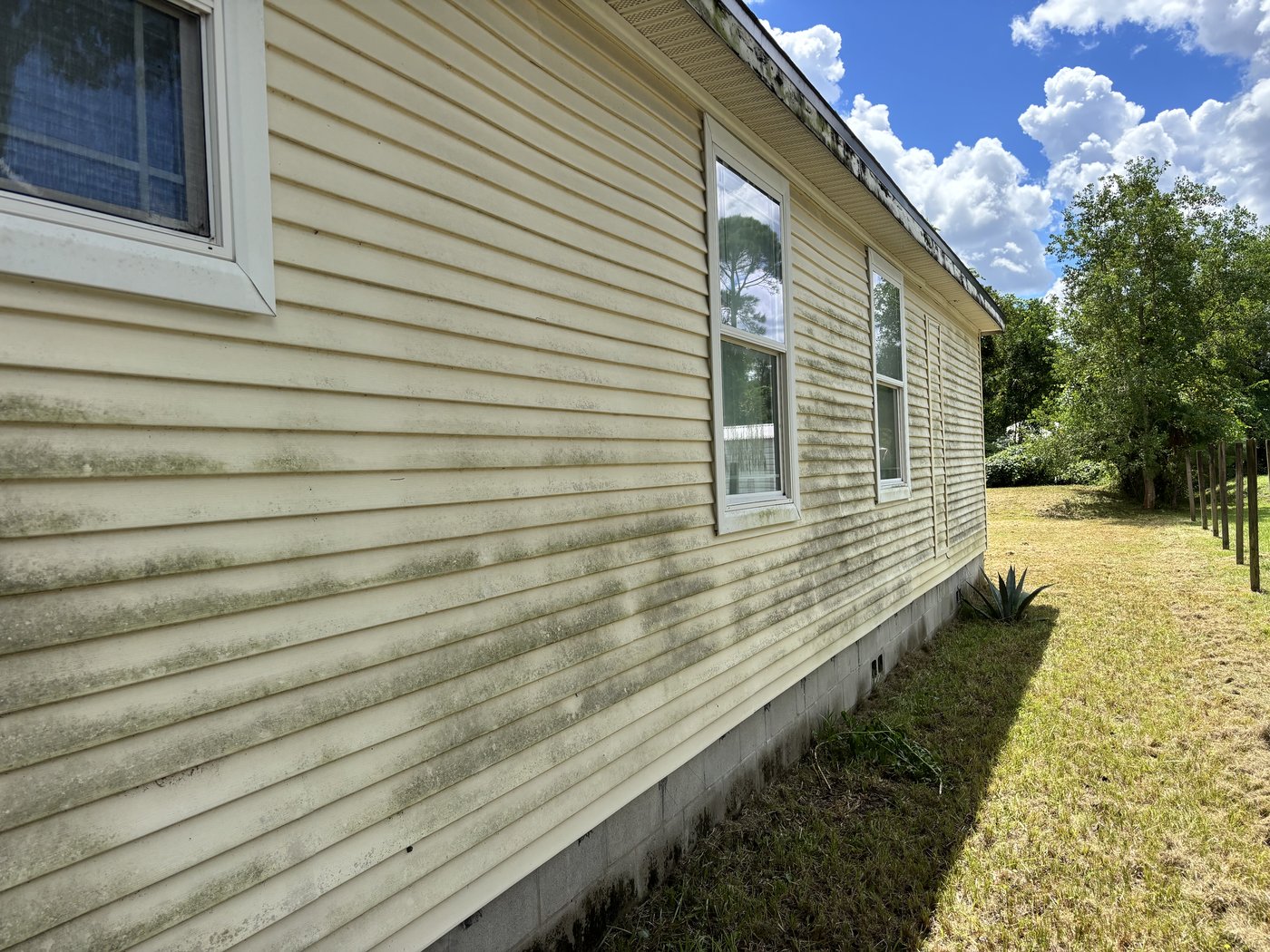
If your siding has developed streaks of green, black, or gray over the past year or two, that’s not just dirt — it’s almost always algae, mold, or mildew, and Florida’s humidity makes it spread fast. Soft washing is the method most exterior cleaning professionals actually recommend for siding, and it’s very different from renting a pressure washer and going at it yourself.
Soft washing uses low water pressure combined with a specialized cleaning solution to break down algae, mold, mildew, and grime at the source, rather than trying to blast it off with force. The solution does the work; the water just rinses it away. This is different from traditional pressure washing, which relies on high water pressure alone.
High-pressure washing can genuinely damage a home’s exterior:
Soft washing is gentle enough for siding, soffits, and painted surfaces while still delivering a genuinely deep clean — it’s the same reason roofing manufacturers specifically recommend soft washing over pressure washing for roof cleaning.
The green and black staining on Florida siding is typically Gloeocapsa magma, an airborne algae that thrives in heat and humidity. Homes with heavy shade, sprinkler overspray hitting the siding, or a north-facing wall that stays damp longer tend to develop staining faster than the rest of the house. It’s extremely common here — not a sign of a dirty home, just a sign of Florida weather.
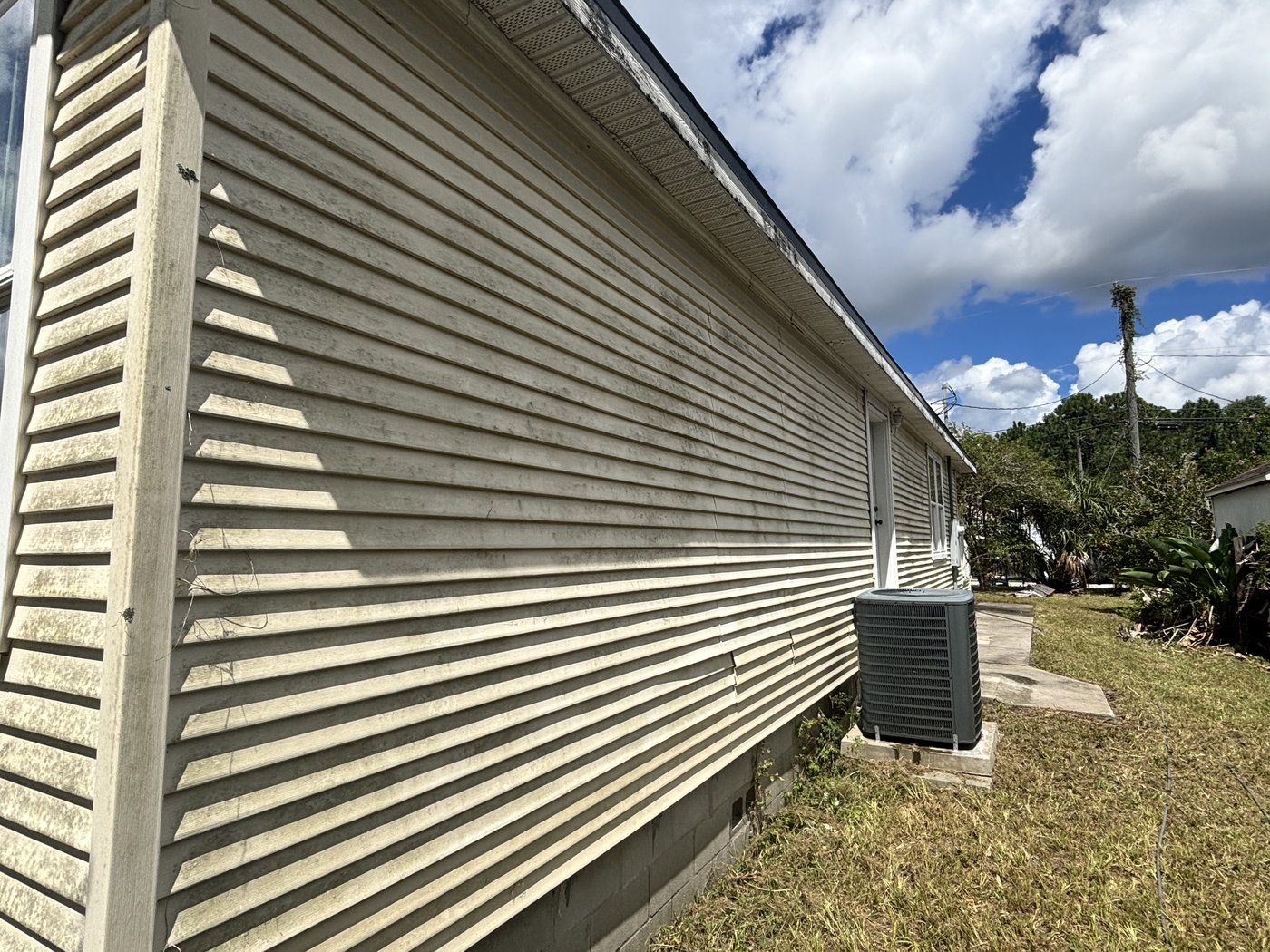
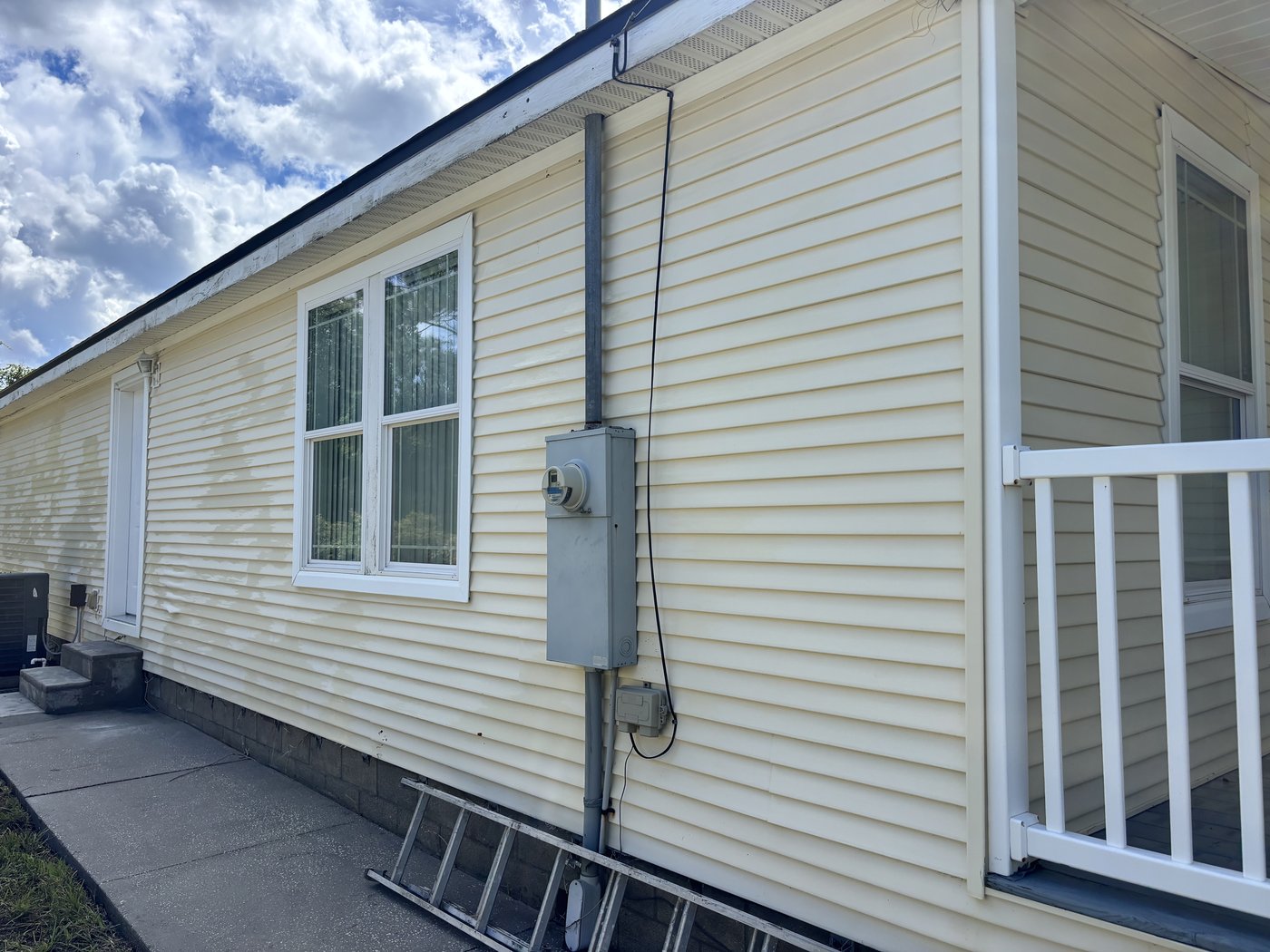
Same house, same day — no pressure damage, just years of buildup lifted away.
Most Florida homes benefit from soft washing about once a year, though shaded, humid, or heavily irrigated properties may show staining again sooner. A home in full sun with good airflow around it may go longer between washes than one tucked under a tree canopy.