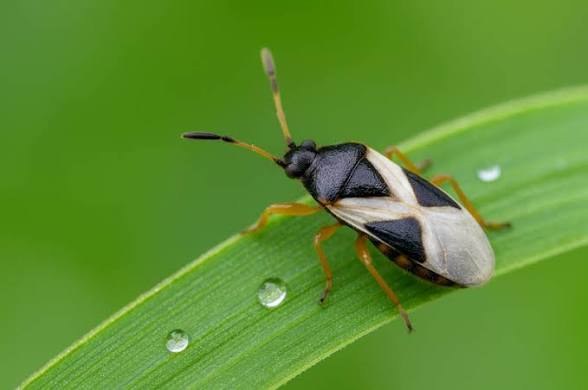
If you’ve ever watered a brown, dying patch of lawn for weeks with no improvement, there’s a good chance the problem was never drought. In St. Johns County and across Florida, chinch bugs are the single most common reason a healthy St. Augustinegrass lawn turns brown and dies in patches — and because the damage looks so much like drought stress, most homeowners treat the wrong problem until it’s spread across half the yard.
What Are Chinch Bugs?
The southern chinch bug is a small insect — adults are only about 1/5 inch long, black with white markings on their wings — that feeds by piercing grass blades and sucking out fluid while injecting a toxin that blocks the plant’s ability to move water. The grass doesn’t just get eaten; it’s poisoned, which is why watering more doesn’t fix the damage.
They feed almost exclusively on St. Augustinegrass, which makes them especially relevant here — it’s the dominant lawn type throughout St. Augustine, Nocatee, World Golf Village, Silverleaf, and the rest of St. Johns County.
How to Tell It’s Chinch Bugs, Not Drought
- Location: damage typically starts in the hottest, sunniest, driest parts of the yard first — often near driveways, sidewalks, or south-facing areas that radiate extra heat
- Watering doesn’t help: drought-stressed grass perks back up within a day or two of watering. Chinch bug damage doesn’t — the patch keeps expanding regardless
- Irregular, spreading patches: the damaged area starts small and grows outward in a ragged, non-uniform shape as the population spreads
- Color progression: affected grass typically goes from a yellowish tint to reddish-brown to straw-colored dead patches
The Float Test
The most reliable way to confirm chinch bugs (rather than guessing) is a simple test:
- Cut both ends off a large coffee can or similar cylinder
- Push it a few inches into the soil at the edge of a damaged area — where healthy and dead grass meet, not the center of a dead patch
- Fill it with water and keep it topped off for 5–10 minutes
- If chinch bugs are present, they’ll float to the surface
Check at the border of the damage, not the middle. By the time the center of a patch is fully dead, the bugs have often already moved on to the edges looking for live grass to feed on.
When They’re Most Active
Chinch bug populations build through the warm season and peak during the hottest, driest stretches — typically late spring through summer in North Florida. Populations can produce multiple generations in a single season, which is why a small problem in May can become a lawn-wide issue by August if it goes untreated.
Conditions That Make It Worse
- Drought-stressed grass is more vulnerable — chinch bugs prefer hot, dry conditions and thin, stressed turf
- Excess thatch (the layer of dead organic matter at soil level) gives chinch bugs a protected place to live and multiply
- Over-fertilizing with nitrogen can actually attract higher chinch bug populations by producing lush, tender growth they prefer
- Mowing too short stresses the grass and removes some of its natural resilience
Prevention
Good cultural practices won’t guarantee you never see chinch bugs, but they meaningfully reduce how bad an infestation gets:
- Mow at the correct height for St. Augustinegrass (3.5–4 inches) — taller grass shades the soil and stays more resilient
- Water deeply and infrequently rather than daily light watering, which keeps grass stressed and thatch-prone
- Avoid heavy nitrogen applications, especially during peak chinch bug season
- Keep thatch buildup in check
- Check vulnerable areas (hot, sunny, sidewalk-adjacent sections) periodically during summer rather than waiting for visible damage
When to Call a Professional
Once chinch bugs are confirmed, timing and treatment matter — and because they build resistance to certain treatments over time in some areas, what worked for a neighbor’s lawn last year isn’t always the right call this year. If the float test confirms an active population, or if you have recurring brown patches every summer, it’s worth having someone experienced take a look before the damage spreads to healthy grass.
We keep an eye out for early chinch bug damage as part of every regular mowing visit throughout St. Johns County — catching it early is the difference between treating a small patch and re-sodding half a yard.